Dernière mise à jour: Août 17, 2026
In the journal Nature Cell Biology, the researchers describe what happened when they transplanted liver stem cells into mice with severely damaged livers.
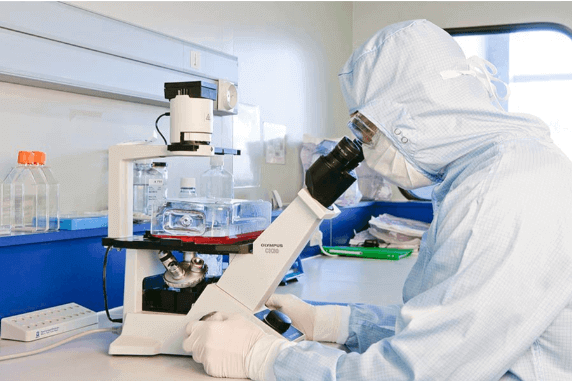
Over the ensuing months, the cells spurred major areas of the liver to regrow, improving the structure and function of the animals’ organs.
The liver is generally very good at healing itself. This is because it contains cells called hepatocytes that are capable of self-renewal following injury. Cependant, these cells are less capable of self-renewal following severe injury, such as that caused by conditions like cirrhosis and acute liver failure.
Aussi, hepatocytes are not easy to grow under lab conditions, which limits their potential for transplant.
That is why the team decided to find out whether liver stem cells – called hepatic progenitor cells (HPC) – can regenerate liver tissue.
HPCs are much easier to grow in the lab, and they have the flexibility to transform into hepatocytes and other types of liver cells.
Approach to be tested using cellules humaines
If the results they achieved with HPCs in the mice can be replicated with human HPCs, then the team believes this could lead to cell transplants as a treatment for liver failure instead of organ transplant.
Senior author Stuart Forbes, a professor in the Medical Research Council (MRC) Centre for Regenerative Medicine at the University of Edinburgh in the UK, notes:
“It will be some time before we can turn this into reality as we will first need to test our approach using human cells. This is much needed as liver disease is a very common cause of death and disability for patients in the UK and the rest of the world.”
In the longer term, the researchers hope to achieve the same results by using drugs that stimulate stem cells inside the patient to regenerate the damaged liver.
The study is an example of ongoing research in regenerative medicine, supported by these and other sponsors, that seeks new ways to treat diseases with no cure, such as liver failure, arthrite, Maladie de Parkinson et cécité.
Entre-temps, scientists are also moving closer to being able to regenerate whole limbs from stem cells.

Examen de cas scientifiques
Souhaitez-vous savoir si les programmes cliniques actuels, développements récents en recherche, ou des approches émergentes peuvent être adapté à votre situation individuelle?
Envoyez votre question à notre équipe scientifique. Le siège social de NBScience au Royaume-Uni coordonne les demandes de renseignements à travers le réseau international de centres médicaux, scientifiques, et consultants spécialisés.
- Examen des informations que vous fournissez
- Informations pertinentes sur la recherche et les programmes cliniques
- Une réponse claire et adaptée à votre situation
Aucune obligation. Votre question sera examinée de manière confidentielle.
Informations pédagogiques et de recherche uniquement. Ce service ne constituer un avis médical, diagnostic, ordonnance, ou un personnalisé recommandation de traitement.

