Last updated: August 16, 2026
STEM CELL THERAPY AND CLINICAL APPLICATIONS
Comprehensive Professional Certification Program
Master the Science and Clinical Practice of Stem Cell Therapy
The Stem Cell Therapy and Clinical Applications program is an advanced professional training course designed for physicians and healthcare professionals seeking practical and evidence-based knowledge in regenerative medicine.
The curriculum combines modern stem cell biology with real-world clinical protocols, allowing participants to understand not only the scientific principles behind regenerative therapies but also their practical implementation across multiple medical specialties.
Whether you are looking to integrate stem cell therapy into your clinical practice or expand your expertise in regenerative medicine, this course provides a structured pathway from basic science to advanced clinical applications.
Why Choose This Program?
- Comprehensive training developed for medical professionals
- 100% online and self-paced learning
- Start the course at any time
- Unlimited access to all educational materials
- Personal tutor support throughout the training
- Evidence-based clinical protocols
- Physical and digital Certificate of Completion
- International educational standards
Course Curriculum
Module 1
Foundations of Stem Cell Biology
The first module provides a comprehensive understanding of stem cell science and regenerative medicine.
Participants will study:
- Biology of stem cells
- Cellular characteristics and regenerative potential
- Embryonic stem cells
- Adult stem cells
- Induced pluripotent stem cells (iPSCs)
- Mesenchymal Stem Cells (MSCs)
- Cellular differentiation
- Homing mechanisms
- Paracrine signaling
- Immunomodulatory properties
- Current scientific evidence and clinical perspectives
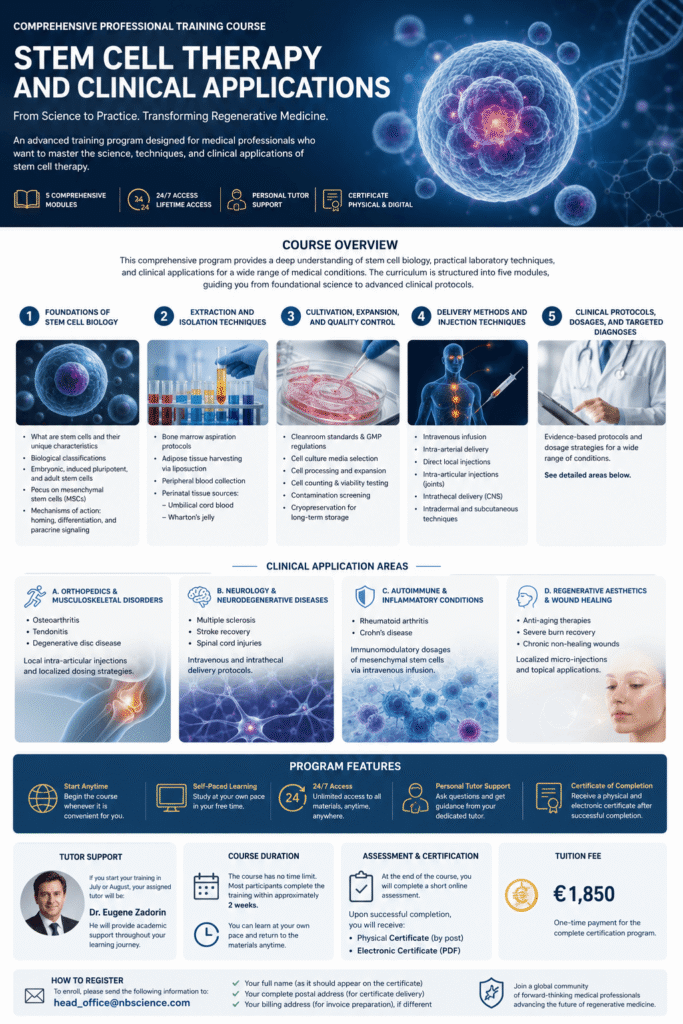
This module establishes the scientific foundation required for all subsequent practical and clinical applications.
Module 2
Stem Cell Extraction and Isolation Techniques
Participants learn how stem cells are obtained from different tissue sources using standardized medical procedures.
Topics include:
Bone Marrow
- Bone marrow aspiration
- Harvesting protocols
- Sample processing
Adipose Tissue
- Liposuction techniques
- Isolation of adipose-derived stem cells
- Stromal vascular fraction (SVF)
Peripheral Blood
- Collection methods
- Cell separation
- Processing techniques
Perinatal Tissue Sources
- Umbilical cord blood
- Wharton’s Jelly
- Placental tissue
Special attention is given to sample handling, sterility, and preservation of cell viability.

Module 3
Cell Processing, Expansion and Quality Control
This module focuses on laboratory procedures required for stem cell preparation.
Participants will learn:
- Good Manufacturing Practice (GMP)
- Cleanroom standards
- Laboratory safety
- Cell culture techniques
- Expansion protocols
- Growth media selection
- Cell counting
- Viability assessment
- Contamination screening
- Cryopreservation
- Long-term storage methods
- Documentation and quality assurance
Module 4
Stem Cell Delivery Methods and Injection Techniques
Effective treatment depends not only on cell quality but also on proper administration.
This module covers:
Systemic Administration
- Intravenous infusion
- Intra-arterial administration
Local Applications
- Intra-articular injections
- Intramuscular injections
- Soft tissue injections
Neurological Procedures
- Intrathecal delivery
Dermatological Applications
- Intradermal injections
- Subcutaneous administration
Clinical indications, contraindications and safety protocols are discussed throughout the module.
Module 5
Clinical Protocols, Dosages and Medical Applications
The final module focuses on practical treatment strategies using evidence-based protocols.
Participants learn:
- Patient evaluation
- Patient selection
- Dosage calculation
- Treatment planning
- Follow-up protocols
- Safety considerations
- Clinical documentation
- Combination therapies
Clinical Applications
Cardiovascular and Vascular Regenerative Medicine
Stem Cell Therapy for Cardiovascular Diseases, Ischemic Heart Disease and Vascular Regeneration
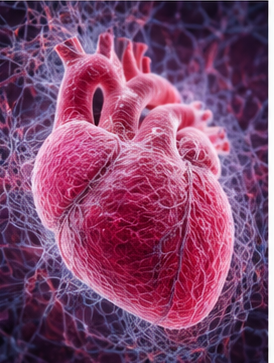
Cardiovascular diseases remain the leading cause of morbidity and mortality worldwide. In recent years, regenerative medicine has emerged as a promising field for supporting myocardial repair, improving vascular function, reducing inflammation, and enhancing tissue regeneration following ischemic injury.
This advanced module explores current clinical applications of stem cell therapy in cardiovascular medicine, focusing on evidence-based protocols, mechanisms of action, patient selection, and regenerative treatment strategies for a broad spectrum of cardiac and vascular disorders.
Participants will gain an in-depth understanding of the regenerative potential of mesenchymal stem cells (MSCs), bone marrow-derived mononuclear cells (BMMNCs), endothelial progenitor cells (EPCs), and other cellular therapies currently investigated in cardiovascular research and clinical practice.
Clinical Topics Covered
Ischemic Heart Disease
Comprehensive review of regenerative treatment strategies for patients with:
- Stable coronary artery disease
- Chronic myocardial ischemia
- Microvascular dysfunction
- Diffuse coronary artery disease
- Patients not eligible for conventional revascularization
Discussion includes the role of stem cells in improving myocardial perfusion, promoting angiogenesis, reducing ischemic injury, and enhancing cardiac function.
Myocardial Infarction and Post-Infarction Cardiac Repair
This section focuses on myocardial regeneration following acute and chronic myocardial infarction.
Topics include:
- Acute myocardial infarction
- Chronic ischemic cardiomyopathy
- Left ventricular remodeling
- Post-infarction fibrosis
- Myocardial scar reduction
- Ventricular dysfunction
- Prevention of adverse cardiac remodeling
- Regeneration of damaged myocardium
Participants learn how regenerative therapies may contribute to preserving viable myocardium, stimulating neovascularization, improving ventricular performance, and supporting long-term cardiac recovery.
Heart Failure and Cardiac Regeneration
Evidence-based approaches for patients with:
- Chronic heart failure
- Ischemic cardiomyopathy
- Dilated cardiomyopathy
- Reduced left ventricular ejection fraction (HFrEF)
- Functional cardiac impairment
Special emphasis is placed on cellular mechanisms that promote myocardial repair, improve myocardial contractility, reduce inflammation, and enhance overall cardiac performance.
Peripheral Vascular Disease
Regenerative treatment protocols for vascular disorders including:
- Peripheral arterial disease (PAD)
- Critical limb ischemia
- Diabetic vascular complications
- Chronic ischemic ulcers
- Endothelial dysfunction
- Impaired tissue perfusion
Participants explore how stem cell therapy may stimulate collateral vessel formation, improve microcirculation, and support tissue preservation in patients with advanced vascular disease.
Cerebrovascular Diseases
Applications of regenerative medicine in cerebrovascular disorders include:
- Ischemic stroke
- Cerebral ischemia
- Post-stroke neurological recovery
- Cerebral microvascular dysfunction
- Neurovascular regeneration
The module reviews current evidence regarding stem cell-mediated neuroprotection, angiogenesis, neuroplasticity, and functional neurological recovery.
Pulmonary Vascular Disorders
Participants will study regenerative approaches for selected pulmonary vascular conditions, including:
- Pulmonary arterial hypertension (PAH)
- Pulmonary vascular remodeling
- Chronic hypoxic pulmonary disease
- Endothelial dysfunction of the pulmonary circulation
The module discusses experimental and emerging clinical applications aimed at restoring vascular integrity, reducing inflammation, and improving pulmonary hemodynamics.
Mechanisms of Cardiovascular Regeneration
Participants will develop a detailed understanding of how stem cells exert their therapeutic effects through:
- Angiogenesis and neovascularization
- Endothelial repair
- Reduction of myocardial fibrosis
- Anti-inflammatory activity
- Immunomodulation
- Anti-apoptotic mechanisms
- Paracrine signaling
- Extracellular vesicle (exosome)-mediated communication
- Activation of endogenous cardiac repair pathways
- Improvement of microvascular circulation
- Enhancement of tissue oxygenation
Clinical Delivery Strategies
Different methods of stem cell administration are reviewed according to specific cardiovascular indications:
- Intravenous infusion
- Intracoronary administration
- Transendocardial injection
- Intramyocardial injection
- Catheter-based delivery systems
- Combined regenerative treatment protocols
Clinical indications, procedural considerations, contraindications, and patient safety are discussed for each delivery technique.
Patient Selection and Clinical Protocols
Participants will learn how to develop individualized regenerative treatment plans based on:
- Cardiovascular risk assessment
- Disease severity
- Imaging findings
- Cardiac MRI and echocardiographic evaluation
- Laboratory biomarkers
- Functional classification
- Cell dosage calculation
- Follow-up strategies
- Outcome evaluation
Future Directions in Cardiovascular Regenerative Medicine
The module concludes with an overview of emerging technologies shaping the future of cardiac regeneration, including:
- Exosome-based therapies
- Cardiac progenitor cells
- Tissue-engineered vascular grafts
- Bioengineered cardiac patches
- Gene-enhanced stem cell therapy
- 3D bioprinting for myocardial reconstruction
- Personalized regenerative medicine
- Combination therapies integrating stem cells, biomaterials, and growth factors
Participants will review current clinical trials, translational research, and future perspectives for regenerative cardiovascular medicine.
Orthopedics and Musculoskeletal Disorders
Clinical protocols include:
- Osteoarthritis
- Tendon injuries
- Ligament injuries
- Degenerative disc disease
- Sports medicine
- Cartilage regeneration
Participants study local injection techniques and dosing strategies for orthopedic applications.
Neurology and Neurodegenerative Diseases
Evidence-based protocols for:
- Multiple sclerosis
- Stroke rehabilitation
- Spinal cord injury
- Peripheral nerve disorders
- Neuroregeneration
Focus is placed on intravenous and intrathecal administration techniques.
Autoimmune and Inflammatory Diseases
Participants learn therapeutic strategies for:
- Rheumatoid arthritis
- Crohn’s disease
- Systemic inflammatory disorders
- Immune modulation
Special emphasis is placed on the immunomodulatory effects of mesenchymal stem cells.
Regenerative Aesthetic Medicine and Wound Healing
Applications include:
- Facial rejuvenation
- Anti-aging medicine
- Hair restoration
- Chronic wounds
- Diabetic ulcers
- Burn recovery
- Skin regeneration
Protocols combine localized injections with regenerative treatment strategies.
Learning Format
The course is delivered entirely online through our dedicated educational platform.
After enrollment, participants receive immediate access to all study materials.
The program includes:
- 24/7 online access
- Self-paced learning
- Unlimited study time
- Downloadable educational materials
- Clinical presentations
- Treatment protocols
- Tutor guidance throughout the course
Most participants complete the program within approximately two weeks, although there is no required completion deadline.
Personal Tutor Support
Every participant is assigned a personal academic tutor.
Students beginning their training during July or August will be supervised by
Dr. Eugene Zadorin, PhD
who will provide guidance, answer clinical questions and support participants throughout the learning process.
Assessment and Certification
At the conclusion of the course, participants complete a short online assessment covering the material presented throughout the program.
Upon successful completion, graduates receive:
- Printed International Certificate
- Electronic Certificate (PDF)
- Official confirmation of professional training in Stem Cell Therapy and Clinical Applications
Tuition Fee
€1,850
The tuition fee includes:
- Complete educational program
- Unlimited platform access
- Tutor support
- Assessment
- Electronic certificate
- Printed certificate
- International certification
Registration
Enrollment is open throughout the year.
There are no fixed start dates, allowing participants to begin their studies whenever it is most convenient.
To register, please send the following information to:
Please include:
- Full name (exactly as it should appear on the certificate)
- Complete postal address (for delivery of the printed certificate)
- Billing address (for invoice preparation, if different)
Once your registration is confirmed, you will receive access to the online learning platform and may begin your training immediately.
Scientific Case Review
Would you like to understand whether current clinical programs, recent research developments, or emerging approaches may be relevant to your individual situation?
Send your question to our scientific team. The NBScience head office in the United Kingdom coordinates inquiries across international network of medical centres, scientists, and specialised consultants.
- Review of the information you provide
- Relevant research and clinical program information
- A clear response focused on your situation
No obligation. Your question will be reviewed confidentially.
Educational and research information only. This service does not constitute medical advice, diagnosis, prescription, or a personalized treatment recommendation.

