Son güncelleme: Ağustos 16, 2026
Muse Hücre Terapisi: Nasıl Çalışır?, Duruma Göre Araştırma, Emniyet, Napoli'de Maliyet ve Kullanılabilirlik, Florida
Evidence-based medical review | Ağustos ayında güncellendi 2026
Muse Hücre Terapisi: Nasıl Çalışır?, Duruma Göre Araştırma, Emniyet, Napoli'de Maliyet ve Kullanılabilirlik, Florida
Muse cells are an investigational regenerative-cell platform being studied for their ability to detect injury signals, home to damaged tissue and potentially support tissue repair. This review explains the proposed mechanism, the level of evidence for major medical conditions, FDA status and an illustrative treatment cost in Naples, Florida.
Muse hücreleri nelerdir??
Muse hücreleri ilk olarak strese dayanıklı hücreler olarak tanımlandı., SSEA-3-positive population within mesenchymal tissues and mesenchymal stromal cell preparations. Embriyonik kök hücrelerin veya uyarılmış pluripotent kök hücrelerin aksine, Muse cells occur naturally in adult tissues. Experimental studies report that they can generate cell types associated with all three germ layers while avoiding teratoma formation in the models tested.
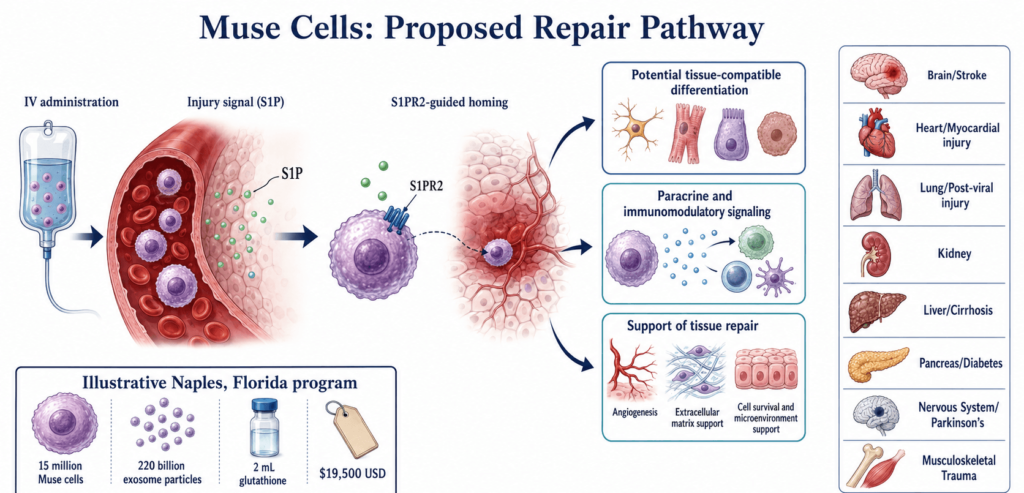
These properties have led researchers to investigate a form of “body-guided” repair. Instead of differentiating cells into a single mature cell type before administration, Muse cells may be delivered systemically, recognize biochemical signals released by injured tissue, migrate to the damaged area and contribute to recovery through several complementary pathways.
Muse hücreleri jenerik mezenkimal stromal hücrelerle karıştırılmamalıdır, hematopoietik kök hücreler, induced pluripotent stem cells or exosomes. A product represented as Muse cells should document its source, üretim süreci, kimlik testi, SSEA-3-positive fraction, saflık, yaşayabilirlik, kısırlık, endotoxin level, mycoplasma testing and batch-release specifications.
Exosomes are not cells. They are extracellular vesicles released by cells and should be counted, characterized and quality-controlled separately from a live Muse-cell product.
Muse hücreleri nasıl çalışabilir?
- Yaralanma algılama: Hasar görmüş hücreler sfingozin-1-fosfat salgılar, commonly abbreviated as S1P, together with other molecular distress signals.
- Seçici hedef arama: Muse hücreleri S1PR2'yi eksprese eder, a receptor implicated in migration toward higher S1P concentrations around injured tissue.
- Doku entegrasyonu ve farklılaşması: klinik öncesi çalışmalar, homing sonrasında doku uyumlu hücre tiplerine spontan farklılaşmayı bildirmektedir.
- Parakrin sinyali: salgılanan sitokinler, büyüme faktörleri ve hücre dışı veziküller inflamasyonu etkileyebilir, anjiyogenez, cell survival and the local repair environment.
- Immune interaction: allogeneic Muse-cell studies have explored treatment without HLA matching or long-term immunosuppression. This remains an investigational feature and does not eliminate the need for rigorous safety monitoring.

Muse cell research by medical condition
The essential distinction is between evidence from controlled human studies and evidence from cell cultures or animal models. Biological plausibility is not the same as demonstrated benefit for patients.
| Durum | Current evidence | Araştırmanın önerdiği şey |
|---|---|---|
| Subakut iskemik inme | Early human randomized trial | Allojeneik Muse hücre ürünü CL2020'nin randomize, plasebo kontrollü bir çalışması, olası bir fonksiyonel fayda sinyali bildirdi. Daha büyük doğrulayıcı denemeler ve düzenleyici inceleme gerekli olmaya devam ediyor. |
| Akut miyokard enfarktüsü | İnsanda ilk kez yapılan küçük çalışma | An early study reported feasibility and improvement signals in left-ventricular function. The number of treated patients was very small, so efficacy has not been established. |
| Parkinson hastalığı | Preclinical or indirect | Nöroprotektif, immunomodulatory and neural-differentiation concepts are relevant, but robust clinical efficacy data for Muse cells in Parkinson’s disease are lacking. |
| Böbrek hastalığı | Öncelikle klinik öncesi | Animal research supports injury homing and possible tissue-protective effects in renal injury models. There is no established Muse-cell therapy for chronic kidney disease. |
| Karaciğer hasarı ve siroz | Öncelikle klinik öncesi | Deneysel modeller hedefe ulaşmayı öneriyor, hepatocyte-like differentiation and trophic or antifibrotic effects. Cirrhosis still requires cause-specific care and transplant assessment when indicated. |
| COVID sonrası akciğer sorunları | Muse'a özgü klinik kanıtların yetersizliği | Anti-inflammatory and repair effects remain hypotheses. Persistent dyspnea requires assessment for fibrosis, damar hastalığı, kalp hastalığı, kondisyon kaybı ve diğer tedavi edilebilir nedenler. |
| Tip 1 diyabet | Preclinical or indirect | Replacing insulin-producing beta cells and controlling autoimmunity are separate challenges. Muse-cell therapy has not been demonstrated to replace insulin or prevent autoimmune recurrence. |
| Tip 2 diyabet | Muse'a özgü yetersiz kanıt | Management remains based on nutrition, fiziksel aktivite, kilo yönetimi, glucose-lowering medication and cardiovascular-risk reduction. |
| Travma, spinal cord or brain injury | Klinik öncesi ve erken çeviri | Animal studies report homing and functional-recovery signals in neurological injury models. Doz, rota, timing and patient selection remain unresolved. |
| Anti-aging and longevity | Belirlenmiş bir klinik endikasyon yok | No validated Muse-cell protocol has been shown to reverse biological aging or extend human lifespan. |
Muse cells after ischemic stroke
Stroke is currently among the most clinically developed Muse-cell research areas. The proposed therapeutic pathway is that intravenously administered donor Muse cells recognize biochemical injury signals, migrate toward peri-infarct tissue, influence damaging inflammation and support neural and vascular repair.
The published randomized CL2020 study is important because it goes beyond laboratory and animal observations. Yine de, it does not establish that Muse cells reliably restore movement, konuşma veya bağımsızlık. Stroke subtype, infarct size and location, başlangıçtan itibaren geçen süre, baseline disability, complications and rehabilitation intensity all affect recovery.
Muse cells after myocardial infarction and in cardiovascular disease
Miyokard enfarktüsünü takiben, kardiyomiyosit kaybı, iltihap, microvascular dysfunction and scar formation may cause adverse ventricular remodeling and heart failure. Muse-cell research has investigated whether systemically administered cells can home to injured myocardium, support blood-vessel formation and contribute to cardiac-lineage repair.
A small first-in-human study of CL2020 reported encouraging safety and left-ventricular function signals, while animal studies provide mechanistic support. Fakat, standard emergency reperfusion, kılavuza yönelik ilaç, cardiac rehabilitation and indicated device or surgical therapy must never be delayed or replaced.
Muse cells for Parkinson’s disease and neurological disorders
An effective regenerative treatment for Parkinson’s disease would need to address dopaminergic-neuron loss, network dysfunction and continuing neurodegeneration without producing tumors, immune complications or dyskinesia. Muse cells possess research characteristics that justify further study, including stress tolerance, injury homing and neural differentiation in experimental systems.
Clinical evidence is not yet sufficient to claim that a Muse-cell infusion can regenerate the substantia nigra, restore dopamine networks or stop disease progression. Muse-cell therapy should therefore be described as investigational rather than as an established Parkinson’s treatment.
Muse cells for kidney disease
Preclinical renal-injury models suggest that Muse cells may migrate toward damaged kidney tissue and provide cytoprotective, immunomodulatory and regenerative signals. Chronic kidney disease is more complex than a single acute injury: fibrozis, vascular changes, continuing metabolic or immune injury and reduced nephron reserve may limit the potential for regeneration.
Blood-pressure control, diyabet tedavisi, nephroprotective medication, avoidance of nephrotoxins and timely dialysis or transplant planning remain the evidence-based foundations of care.
Muse cells for liver disease and cirrhosis
Experimental liver studies suggest that Muse cells may home to injured tissue, differentiate toward hepatocyte-like cells and provide trophic or antifibrotic effects. İlerlemiş sirozda, Yine de, disrupted liver architecture, portal hipertansiyon, ongoing inflammation and reduced functional reserve create major biological obstacles.
Removing or controlling the cause of liver injury, portal hipertansiyon komplikasyonlarını yönetmek, hepatocellular-carcinoma surveillance and timely transplant referral remain essential.
Muse cells for post-COVID lung problems
Anti-inflammatory and tissue-repair pathways provide a theoretical basis for research in persistent lung injury after viral disease. şu anda, clinical claims should remain cautious. Post-COVID breathlessness can result from pulmonary fibrosis, damar hastalığı, cardiac impairment, otonom fonksiyon bozukluğu, respiratory-muscle weakness, deconditioning or other conditions that require individual diagnosis.
Muse cells for type 1 ve yazın 2 diyabet
Tip 1 ve yazın 2 diabetes require different therapeutic strategies. Tip 1 diabetes combines pancreatic beta-cell loss with autoimmunity. A regenerative treatment would need both to restore functional insulin-producing cells and to prevent renewed immune destruction. Tip 2 diabetes involves insulin resistance, beta-cell dysfunction and systemic metabolic and cardiovascular factors.
Muse-cell therapy has not been established as a replacement for insulin, glucose monitoring, beslenme, egzersiz yapmak, evidence-based medication or cardiovascular-risk management.
Muse cells for trauma and tissue injury
Experimental studies have explored Muse cells in traumatic brain injury, omurilik yaralanması, muscle damage and other forms of tissue injury. Reported mechanisms include targeted homing, inflamatuar modülasyon, vascular support and tissue-compatible differentiation. Human benefit, ideal treatment timing, administration route and effective dose remain uncertain.
Muse cells and anti-aging
“Anti-aging” is not a defined clinical indication. Improvements in fatigue, laboratory biomarkers or subjective well-being do not prove that an intervention reverses biological aging, reduces disease incidence, extends healthspan or increases survival. Anti-aging claims require specific, measurable endpoints and controlled long-term human studies.
Illustrative Muse cell therapy dosage and cost in Naples, Florida
Illustrative commercial example — not a validated standard-of-care regimen
- Konum: Napoli, Florida, Amerika
- İlham hücreleri: 15 milyon hücre
- Eksozomlar: 220 milyar eksozom parçacıkları
- Glutatyon: 2 ml
- Illustrative total price: $19,500 Amerikan Doları
Önemli: These quantities are not evidence-based universal doses. The cellular identity, doku kaynağı, saflık, yaşayabilirlik, biological potency, exosome characterization, manufacturing controls and regulatory authorization matter more than headline cell or particle counts.
The $19,500 figure is an illustrative package price supplied for the Naples program described in this article. It is not an independently verified market average and does not establish safety, verimlilik, regulatory compliance or value. A patient should obtain an itemized written quotation identifying what is included in laboratory testing, ürün imalatı, doktor hizmetleri, tesis ücretleri, follow-up and management of complications.
Questions to ask before considering a Muse-cell program
- Is the treatment being administered under an FDA-authorized Investigational New Drug application, and what is the IND number?
- Is there a ClinicalTrials.gov registration, and does it match the treating facility, ürün, hastalık ve protokol?
- What is the tissue source, and are the cells autologous or allogeneic?
- Muse hücresi kimliği nasıl doğrulanır?, SSEA-3 pozitifliği dahil, saflık ve yaşayabilirlik?
- Can the provider supply lot-specific sterility, endotoksin ve mikoplazma sonuçları?
- How are 220 billion exosome particles counted, characterized and tested for contamination and biological activity?
- What outcomes will be measured, at what time points and with which validated clinical scales?
- Hangi olumsuz olay izleme, acil durum kapsamı, follow-up and independent ethics oversight apply?
- Which parts of the $19,500 price are refundable, and who pays for treatment of complications?
- How will the investigational program be coordinated with the patient’s established specialist care?
Frequently asked questions about Muse cell therapy
Muse hücreleri mezenkimal kök hücrelerle aynı mıdır??
HAYIR. Muse hücreleri farklı bir strese dayanıklı hücre olarak tanımlanıyor., SSEA-3-positive population found within mesenchymal tissues and in some mesenchymal stromal cell preparations.
Muse hücreleri pluripotent midir??
Muse cells demonstrate triploblastic differentiation potential in research, ancak biyolojik ve klinik olarak embriyonik kök hücrelerden ve indüklenmiş pluripotent kök hücrelerden farklıdırlar..
Muse hücreleri tümörlere neden olur mu??
Published research emphasizes low tumorigenicity and a lack of teratoma formation in tested models. This does not remove the need for product-specific quality controls and long-term human safety surveillance.
What is the recommended Muse-cell dose?
No universal dose has been established across medical conditions. Dose cannot be selected only from body weight or a commercial treatment menu. Product potency, rota, zamanlama, teşhis, disease stage and the authorized clinical protocol all matter.
Are 220 billion exosomes the same as 220 billion Muse cells?
HAYIR. Eksozom parçacıkları hücre içermeyen hücre dışı keseciklerdir. They are biologically and quantitatively distinct from the 15 million live Muse cells in the illustrative program.
öyle mi $19,500 a typical Muse cell therapy price?
It is the illustrative price supplied for the Naples, Florida program described here. It is not a verified national average and does not demonstrate clinical value or regulatory authorization.
Can Muse cells replace standard medical treatment?
HAYIR. Investigational cell treatment should not replace emergency stroke or myocardial-infarction care, insülin, Parkinson’s medication, rehabilitasyon, guideline-directed cardiovascular therapy, diyaliz, transplant evaluation or other established medical care.
Çözüm
Muse cells represent a scientifically distinctive regenerative-cell platform. Their proposed S1P-S1PR2 injury-homing mechanism, stres toleransı, reported non-teratoma-forming profile and early clinical research justify continued investigation.
Aynı zamanda, the current evidence does not support broad claims that Muse cells have been proven to treat stroke, Parkinson hastalığı, kalp hastalığı, COVID sonrası akciğer hasarı, böbrek hastalığı, siroz, diyabet, trauma or biological aging in routine U.S. pratik. Responsible clinical development requires transparent evidence grading, doğrulanmış üretim, lawful regulatory authorization, disease-specific outcomes and long-term follow-up.
Scientific and regulatory sources
- Niizuma K, ve diğerleri. Subakut iskemik inme için CL2020'nin randomize, plasebo kontrollü çalışması.
- Noda T, ve diğerleri. Safety and efficacy of a human Muse cell-based product for acute myocardial infarction.
- Minatoguchi S, ve diğerleri. Donor Muse cell treatment without HLA-matching tests and immunosuppressant treatment.
- Alanazi RF, ve diğerleri. Çok soylu farklılaşan strese dayanıklılık (İlham perisi) hücreler: Kök hücre bazlı tedavide yeni bir dönem.
- Rejeneratif Tıp Ürünleri Hakkında FDA Tüketici Uyarısı, Kök Hücreler ve Eksozomlar Dahil.
- Rejeneratif Tıp Tedavileri Hakkında FDA Önemli Hasta ve Tüketici Bilgileri.
- Exosome Ürünleri Hakkında FDA Kamu Güvenliği Bildirimi.

Bilimsel Vaka İncelemesi
Mevcut klinik programların olup olmadığını anlamak ister misiniz?, son araştırma gelişmeleri, veya ortaya çıkan yaklaşımlar olabilir kişisel durumunuzla alakalı?
Sorunuzu bilimsel ekibimize gönderin. Birleşik Krallık'taki NBScience merkez ofisi, uluslararası tıp merkezleri ağı genelindeki araştırmaları koordine etmektedir., bilim adamları, ve uzman danışmanlar.
- Sağladığınız bilgilerin gözden geçirilmesi
- İlgili araştırma ve klinik program bilgileri
- Durumunuza odaklanmış net bir yanıt
Hiçbir yükümlülük yok. Sorunuz gizli olarak incelenecektir.
Yalnızca eğitim ve araştırma bilgileri. Bu hizmet tıbbi tavsiye teşkil eder, teşhis, reçete, veya kişiselleştirilmiş tedavi önerisi.

