再生医学与健康长寿: 当今科学对间充质干细胞的了解

过去二十年, cellular technologies have evolved from an experimental concept into one of the fastest-growing fields of translational biomedical science.

今天, regenerative medicine is no longer focused exclusively on the treatment of advanced-stage diseases.

An increasing body of research is devoted to understanding how biological aging, chronic physiological stress, immune dysregulation and declining regenerative potential may be studied and addressed before irreversible pathological changes develop.

Aging Begins Much Earlier Than Most People Assume

Contrary to common belief, biological aging does not begin suddenly in later life.

Modern molecular biology shows that age-related changes become measurable as early as the third and fourth decades of life.

这些包括:

• progressive endothelial dysfunction;

• increased oxidative stress;

• chronic low-grade inflammation;

• reduced mitochondrial efficiency;

• gradual remodeling of the immune system;

• decreased regenerative potential;

• slower recovery after prolonged physical or psychological stress.

Most people remain clinically healthy during this period. 尽管如此, molecular changes continue to accumulate silently for many years before clinically evident disease appears.

From the perspective of regenerative medicine, this period represents an important opportunity to support the body’s physiological resilience while its own repair mechanisms remain active.

Mesenchymal Stem Cells — Biological Coordinators of Regeneration

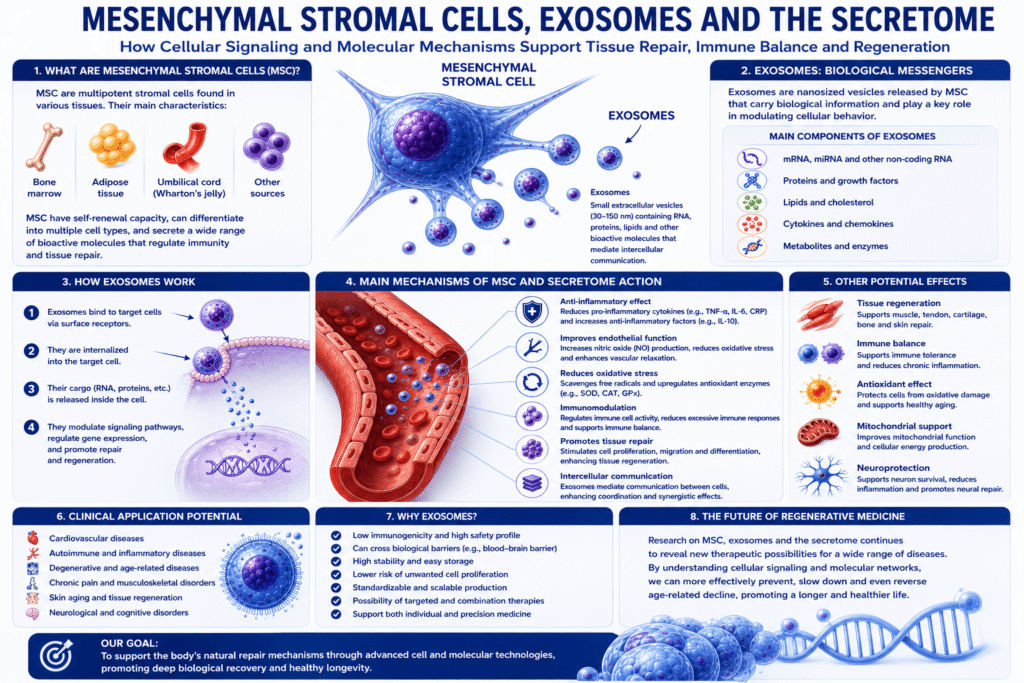
间充质干细胞 (MSC) are among the most widely studied cellular populations in regenerative medicine.

Current scientific evidence indicates that their primary function is not the direct replacement of damaged tissues.

相反, MSC function as biological centers of cellular signaling.

After intravenous administration, they release a complex secretome composed of hundreds of biologically active molecules, 包括:

• growth factors;

• cytokines;

• extracellular vesicles;

• exosomes;

• immunomodulatory proteins.

一起, these signaling molecules influence numerous physiological processes involved in tissue repair and adaptation.

MSC-mediated signaling mechanisms may contribute to:

• physiological regulation of inflammation;

• maintenance of endothelial function;

• vascular homeostasis;

• improvement of microcirculation;

• tissue repair processes;

• maintenance of mitochondrial function;

• immune regulation;

• interaction between the body’s own stem cell populations.

It is precisely these biological properties that explain why MSC continue to attract considerable interest across different areas of regenerative medicine.

Biological Recovery After Chronic Stress

Chronic psychological stress is increasingly considered a systemic biological factor, not merely an emotional state.

Prolonged activation of stress mechanisms may influence:

• immune balance;

• inflammatory signaling;

• sleep quality;

• metabolic regulation;

• vascular function;

• cellular energy metabolism;

• overall physiological resilience of the body.

A Scientific Concept of Biological Recovery

NBS Stem Cells has been developed as a regenerative medicine program designed to support biological recovery through advanced cellular technologies.

Rather than focusing on a single organ system, this concept recognizes that biological aging and chronic physiological stress involve multiple interconnected biological networks.

The scientific objective of the program is to support the body’s intrinsic repair mechanisms through carefully selected regenerative cellular technologies administered within accredited clinical environments.


Two Regenerative Strategies

选项 1

Allogeneic Regenerative Cells from a Certified Cell Bank

The first approach utilizes donor-derived regenerative cells that undergo preparation and rigorous quality control within specialized cell banking facilities.

Because the cellular product is prepared in advance, the clinical procedure can generally be completed during a single visit.


选项 2

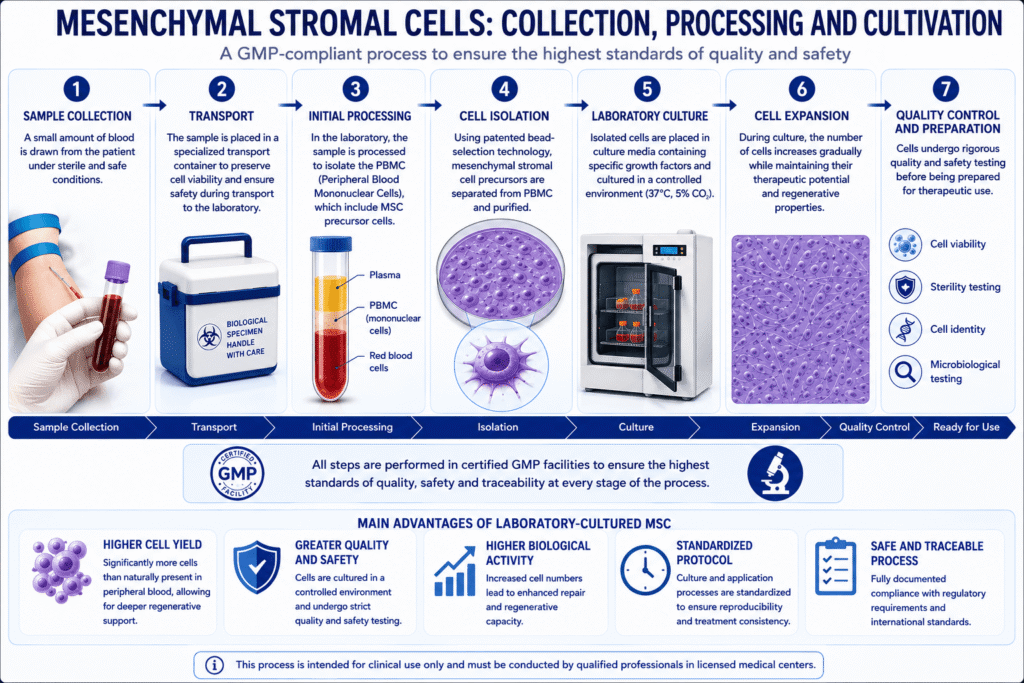
Personalized Autologous Mesenchymal Stem Cells

The second approach is based on a personalized protocol.

第一次访问期间, a small blood sample is collected for laboratory processing and expansion of the patient’s own regenerative cell population under GMP-compliant 状况.

Following laboratory cultivation, the expanded autologous cells are administered intravenously during a second visit approximately one week later.

This approach is intended to provide a substantially greater concentration of regenerative cells than is naturally present in peripheral circulation while using exclusively the patient’s own cellular material.


Why Barcelona?

NBS Stem Cells clinical program is delivered through our clinical infrastructure in Barcelona.

The city combines internationally recognized medical facilities, GMP-certified laboratory capabilities, and multidisciplinary clinical teams with extensive experience in regenerative medicine.

All clinical procedures are performed in accordance with the applicable legal and regulatory framework of the country in which the treatment is provided.


Scientific Perspective

Regenerative medicine is transforming our understanding of human health.

历史上, medicine has focused primarily on the diagnosis and treatment of disease.

Cell-based regenerative technologies introduce a complementary paradigm: supporting the body’s endogenous repair mechanisms before functional decline reaches clinical significance.

The growing body of experimental and clinical evidence highlights the importance of inflammation modulation, enhancement of tissue repair, support of vascular biology, and optimization of immune regulation.

NBS Stem Cells program has been developed within this scientific framework.


Selected Scientific References

Pittenger MF et al. Mesenchymal Stem Cell Perspective: Cell Biology to Clinical Progress. NPJ Regenerative Medicine. 2019.

Caplan AI. 间充质干细胞: Time to Change the Name! 干细胞转化医学. 2017.

Lunyak VV, Amaro-Ortiz A, Gaur M. Mesenchymal Stem Cell Secretome in Tissue Repair and Regeneration. Frontiers in Cell and Developmental Biology. 2022.

Golpanian S et al. Allogeneic Human Mesenchymal Stem Cell Infusions for Aging Frailty (CRATUS Trial). Journal of Gerontology: Series A.

Tompkins BA et al. Mesenchymal Stem Cell Therapy for Aging Frailty. Journal of Gerontology: Series A.

These publications reflect the rapidly expanding scientific literature on mesenchymal stem cell biology, 免疫调节, regenerative signaling, and their potential applications in age-related physiological decline.

科研顾问

有兴趣了解当前的临床计划是否, 研究进展, 或新兴的治疗方法可能与您的情况相关?

仅教育和研究信息. 个人医疗决定应咨询合格的医疗保健专业人员.


国家统计局科学

合同研究组织

WhatsApp