Última atualização: Agosto 16, 2026
Medicina Regenerativa e Longevidade Saudável: O que a ciência sabe hoje sobre células-tronco mesenquimais
Nas últimas duas décadas, as tecnologias celulares evoluíram de um conceito experimental para um dos campos de crescimento mais rápido da ciência biomédica translacional.
Hoje, a medicina regenerativa não se concentra mais exclusivamente no tratamento de doenças em estágio avançado.
Um corpo crescente de pesquisas é dedicado a compreender como o envelhecimento biológico, estresse fisiológico crônico, a desregulação imunológica e o declínio do potencial regenerativo podem ser estudados e abordados antes que alterações patológicas irreversíveis se desenvolvam.
O envelhecimento começa muito mais cedo do que a maioria das pessoas supõe
Ao contrário da crença comum, o envelhecimento biológico não começa repentinamente mais tarde na vida.
A biologia molecular moderna mostra que as mudanças relacionadas com a idade tornam-se mensuráveis já na terceira e quarta décadas de vida.
Estes incluem:
• disfunção endotelial progressiva;
• aumento do estresse oxidativo;
• inflamação crônica de baixo grau;
• eficiência mitocondrial reduzida;
• remodelação gradual do sistema imunológico;
• diminuição do potencial regenerativo;
• recuperação mais lenta após estresse físico ou psicológico prolongado.
A maioria das pessoas permanece clinicamente saudável durante este período. No entanto, as alterações moleculares continuam a acumular-se silenciosamente durante muitos anos antes do aparecimento da doença clinicamente evidente.
Na perspectiva da medicina regenerativa, este período representa uma oportunidade importante para apoiar a resiliência fisiológica do corpo enquanto os seus próprios mecanismos de reparação permanecem activos.
Células-tronco mesenquimais – coordenadores biológicos da regeneração
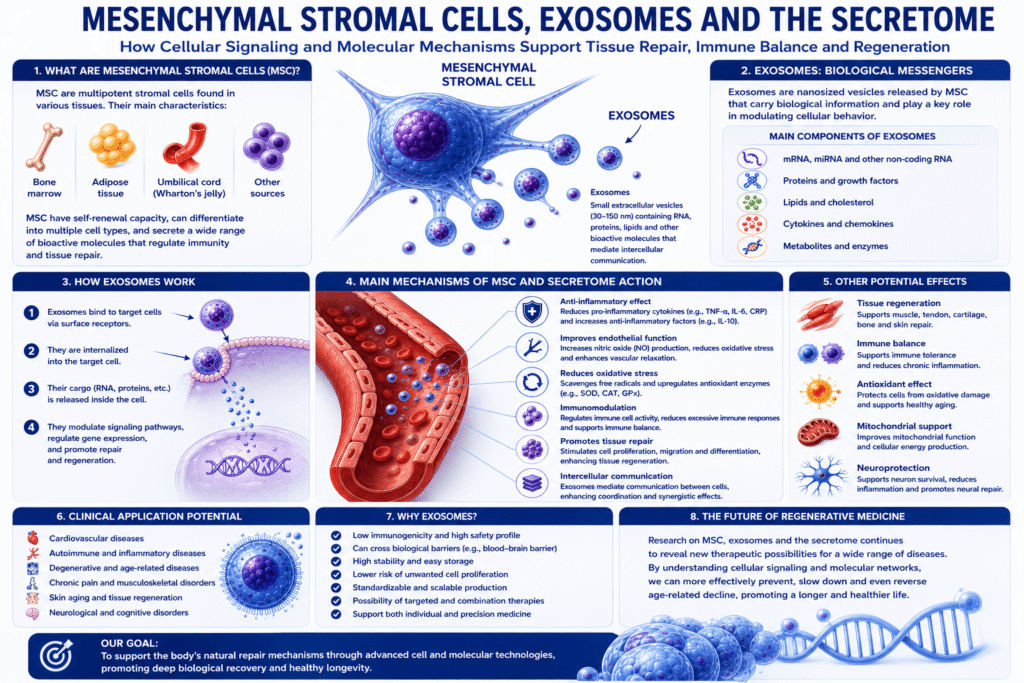
Células-tronco mesenquimais (MSC) estão entre as populações celulares mais amplamente estudadas na medicina regenerativa.
As evidências científicas atuais indicam que a sua função primária não é a substituição direta de tecidos danificados..
Pelo contrário, MSC funcionam como centros biológicos de sinalização celular.
Após administração intravenosa, eles liberam um secretoma complexo composto por centenas de moléculas biologicamente ativas, incluindo:
• fatores de crescimento;
• citocinas;
• vesículas extracelulares;
• exossomos;
• proteínas imunomoduladoras.
Junto, essas moléculas sinalizadoras influenciam numerosos processos fisiológicos envolvidos na reparação e adaptação dos tecidos.
Mecanismos de sinalização mediados por MSC podem contribuir para:
• regulação fisiológica da inflamação;
• manutenção da função endotelial;
• homeostase vascular;
• melhoria da microcirculação;
• processos de reparação de tecidos;
• manutenção da função mitocondrial;
• regulação imunológica;
• interação entre as populações de células-tronco do próprio corpo.
São precisamente estas propriedades biológicas que explicam porque é que as MSC continuam a atrair um interesse considerável em diferentes áreas da medicina regenerativa..
Recuperação biológica após estresse crônico
O estresse psicológico crônico é cada vez mais considerado um fator biológico sistêmico, não apenas um estado emocional.
A ativação prolongada de mecanismos de estresse pode influenciar:
• equilíbrio imunológico;
• sinalização inflamatória;
• qualidade do sono;
• regulação metabólica;
• função vascular;
• metabolismo energético celular;
• resiliência fisiológica geral do corpo.
Um conceito científico de recuperação biológica
Células-tronco NBS foi desenvolvido como um programa de medicina regenerativa concebido para apoiar a recuperação biológica através de tecnologias celulares avançadas.
Em vez de focar em um único sistema orgânico, este conceito reconhece que o envelhecimento biológico e o estresse fisiológico crônico envolvem múltiplas redes biológicas interconectadas.
O objetivo científico do programa é apoiar os mecanismos de reparação intrínsecos do corpo através de tecnologias celulares regenerativas cuidadosamente selecionadas, administradas em ambientes clínicos credenciados..
Duas estratégias regenerativas
Opção 1
Células regenerativas alogênicas de um banco de células certificado
A primeira abordagem utiliza células regenerativas derivadas de doadores que passam por preparação e rigoroso controle de qualidade em instalações especializadas de bancos de células.
Porque o produto celular é preparado com antecedência, o procedimento clínico geralmente pode ser concluído durante uma única visita.
Opção 2
Células-tronco mesenquimais autólogas personalizadas
A segunda abordagem é baseada em um protocolo personalizado.
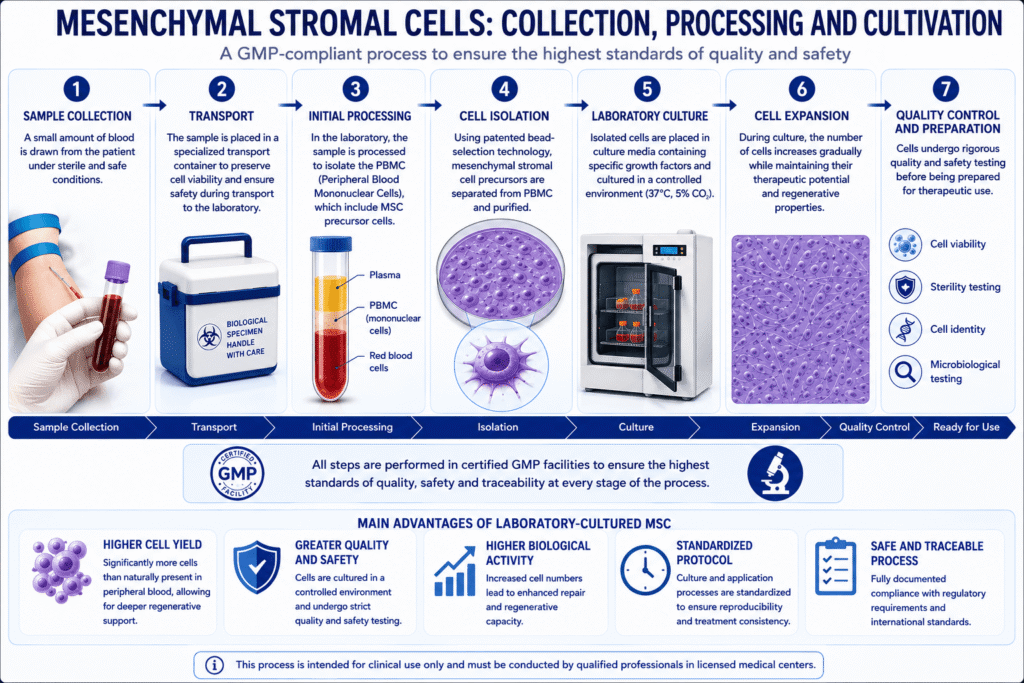
Durante a primeira visita, uma pequena amostra de sangue é coletada para processamento laboratorial e expansão da população de células regenerativas do próprio paciente sob Compatível com GMP condições.
Após cultivo em laboratório, as células autólogas expandidas são administradas por via intravenosa durante uma segunda visita aproximadamente uma semana depois.
Esta abordagem destina-se a fornecer uma concentração substancialmente maior de células regenerativas do que a naturalmente presente na circulação periférica, utilizando exclusivamente material celular do próprio paciente..
Por que Barcelona?
O Células-tronco NBS programa clínico é entregue através de nossa infraestrutura clínica em Barcelona.
A cidade combina instalações médicas reconhecidas internacionalmente, Certificado GMP capacidades laboratoriais, e equipas clínicas multidisciplinares com vasta experiência em medicina regenerativa.
Todos os procedimentos clínicos são realizados de acordo com o quadro legal e regulamentar aplicável do país onde o tratamento é prestado..
Perspectiva Científica
A medicina regenerativa está transformando nossa compreensão da saúde humana.
Historicamente, a medicina tem se concentrado principalmente no diagnóstico e tratamento de doenças.
Tecnologias regenerativas baseadas em células introduzem um paradigma complementar: apoiar os mecanismos de reparação endógenos do corpo antes que o declínio funcional atinja significado clínico.
O crescente corpo de evidências experimentais e clínicas destaca a importância da modulação da inflamação, melhoria da reparação tecidual, suporte da biologia vascular, e otimização da regulação imunológica.
O Células-tronco NBS programa foi desenvolvido dentro desta estrutura científica.
Referências Científicas Selecionadas
Pittenger MF e cols.. Perspectiva das células-tronco mesenquimais: Biologia Celular para o Progresso Clínico. Medicina Regenerativa NPJ. 2019.
Caplan IA. Células-tronco mesenquimais: Hora de mudar o nome! Medicina Translacional de Células-Tronco. 2017.
Lunyak V.V., Amaro Ortiz A, Gaur M. Secretoma de células-tronco mesenquimais na reparação e regeneração de tecidos. Fronteiras na biologia celular e do desenvolvimento. 2022.
Golpanian S et al. Infusões alogênicas de células-tronco mesenquimais humanas para fragilidade do envelhecimento (Teste CRATUS). Revista de Gerontologia: Série A.
Tompkins BA e outros. Terapia com células-tronco mesenquimais para fragilidade do envelhecimento. Revista de Gerontologia: Série A.
Estas publicações refletem a literatura científica em rápida expansão sobre biologia de células-tronco mesenquimais, imunomodulação, sinalização regenerativa, e suas aplicações potenciais no declínio fisiológico relacionado à idade.

Revisão de Caso Científico
Você gostaria de entender se os programas clínicos atuais, desenvolvimentos de pesquisa recentes, ou abordagens emergentes podem ser relevante para sua situação individual?
Envie sua dúvida para nossa equipe científica. A sede da NBScience no Reino Unido coordena consultas em toda a rede internacional de centros médicos, cientistas, e consultores especializados.
- Revisão das informações que você fornece
- Informações relevantes sobre pesquisas e programas clínicos
- Uma resposta clara focada na sua situação
Sem obrigação. Sua pergunta será analisada confidencialmente.
Apenas informações educacionais e de pesquisa. Este serviço não constituem aconselhamento médico, diagnóstico, prescrição, ou um personalizado recomendação de tratamento.

